Using Caran D’Ache Neocolor II

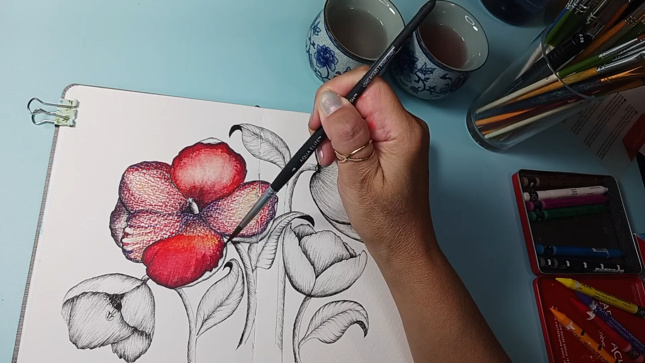
Caran D’Ache Neocolor II offers a wide range of creative possibilities. In this tutorial, I’ll show you one of my favorite ways to use this medium while coloring these poppy flowers. I’ll also explain what Neocolor II is, how to blend the colors, and how you can incorporate it into your own art practice.
What Is Caran D’Ache Neocolor II?
At first glance, Neocolor II looks a little like the crayons you might buy at the grocery store—but it is much more than a simple crayon. These are water-soluble wax pastels that can be used dry or activated with water.
They are highly pigmented, blend beautifully, and work on many surfaces, including paper, wool, ceramics, and stone. They also have excellent lightfastness, which means the colors are resistant to fading when exposed to light over time.

Why Is It Called Neocolor II?
Caran D’Ache is the Swiss company that produces this art supply. The company has been making drawing and writing instruments for more than a century, including pens, pencils, inks, colored pencils, paints, and pastels.
Neocolor I was introduced in 1952 as a high-quality, water-resistant pastel designed for dry use. In 1974, Caran D’Ache introduced Neocolor II. The main difference is that Neocolor II is water-soluble, so it can be used both dry and wet.
A Quick Note About Sponsorship
This video is not sponsored by Caran D’Ache. I purchased this product myself, and I’m sharing it because I genuinely enjoy using it and want to show how it can be used in artwork. However, as an Amazon Associate, I earn from qualifying purchases. The links below are for supplies used in this drawing; any commission helps support my art at no extra cost to you.

Price and Value
Neocolor II is an artist grade art supply of very high quality. Because of that, it can be a bit pricy, however, even a small set can still go a long way because the colors are so concentrated and blend so well.
Lucky, they come in various sizes sets to fit all budgets:
The larger 84-color set is definitely a dream set for me. Just imagine all those yellows, oranges, reds, peaches, browns, greens, blues, and turquoise shades.
For most artists, a smaller set of 10 or 15 colors can still be a practical starting point, because the pigment is so strong, you can achieve a lot with just a few crayons.
Dry Techniques
The simplest way to use Neocolor II is dry, just like a pastel or crayon. You can draw with it and leave the texture visible, which works especially well for expressive art styles. If you prefer a smoother finish, you can blend the pigment with a pencil blender or even your finger.
Wet Techniques
Because Neocolor II is water-soluble, adding water opens up many more possibilities. One of the easiest methods is to use it like watercolor pencils:

1. Color the area with the dry crayon. You can use one color or layer several colors together.

2. Apply water with a brush.
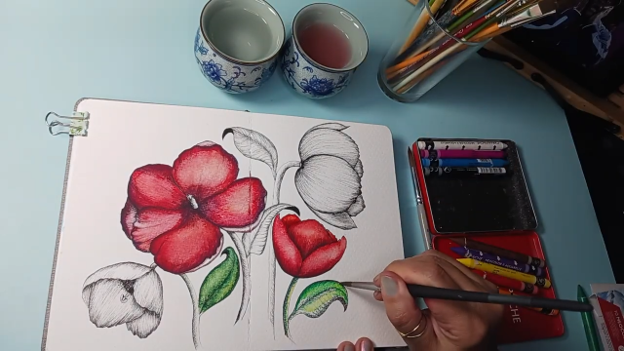
3. Blend the colors gradually as the pigment activates.
This technique is ideal for adding color to an already finished drawing, whether it is done in pencil or ink. If you are using ink, make sure it is waterproof before adding water.
It also works well for coloring books or coloring pages, especially when you want to cover a large background quickly and evenly.
Paper and Water Tips
If you plan to use a lot of water, watercolor paper is usually the safest choice because it helps prevent buckling and damage. Good-quality mixed media paper can also work but be mindful of how much water you add.

This is the watercolor sketchbook that I am using for these poppy flower project.
If you are working in a coloring book, test the paper first. Some coloring books have sturdy paper, but they are rarely made with true watercolor paper. Testing before you begin can help you avoid frustration.
Blending Colors
When blending multiple colors, start with the lightest color first. Then build up the midtones and darker tones, just as you would with colored pencils, watercolor pencils, or watercolor paint.
When adding water, begin in the lightest areas and slowly work toward the darker areas. Blend little by little so you have more control over the final result.

More Ways to Use Neocolor II
There are many other wet and dry techniques to explore. Here are a few options:
· Draw first, then activate with water: Use the crayons as your main drawing tool, then blend the finished drawing with a wet brush. This creates a loose, expressive effect.
· Lift pigment with a wet brush: Touch a wet brush directly to the crayon and use the pigment like paint, similar to working from a watercolor palette.
· Save sharpened pigment: If you sharpen the crayons, save the shavings in small jars or wrapped in foil. You can later mix them with water and use them as paint.
· Create splatter effects: Dip the crayon in water and splatter pigment onto your artwork for a loose, energetic look.
· Add dry texture over watercolor: Once a watercolor painting is dry, use Neocolor II on top to add texture, contrast, and character.
· Blend into wet watercolor: Dip the crayon in water and blend it into wet pools of watercolor for unpredictable, expressive effects.
· Try finger painting: Smudge the pigment with wet fingers for a playful, hands-on approach. I think this technique is super fun!
Choosing Surfaces and Paper
The Neocolor II package notes that the crayons can be used on surfaces such as wood, ceramics, and stone. I have not tried those surfaces yet, but I think it would be interesting to try.
For paper, the possibilities are almost endless. You can use white paper, toned paper, black paper, watercolor paper, mixed media paper, and more. If you are using the crayons dry, almost any paper can work, though higher-quality paper usually gives better results.
Smooth paper and textured paper will create very different effects, so don’t be afraid to experiment. The most important thing is to explore the possibilities and enjoy the process.
Final Thoughts
If you are a beginner artist, I hope this gives you the confidence to try Neocolor II or any new art supply that has been sitting on your wish list. You do not need to know every technique before you begin, and your first attempt does not have to be perfect. Start small, test the colors, add a little water, and see what happens.
New mediums can feel intimidating at first, but they are also an opportunity to play, explore, and discover effects you may not get from your usual supplies. Give yourself permission to experiment without pressure. The more you use the Neocolor II, the more familiar they will feel—and before long, they may become one of your favorite tools to reach for when you want bold color, soft blends, or a little creative adventure.

If you would like to watch a full video with step-by-step instructions of this Neocolor II painting process, please visit my YouTube Channel: https://youtu.be/urPIPpZd2Ts
As always, keep creating!
Trisha

Comments